Casebook · Case 01 · System design
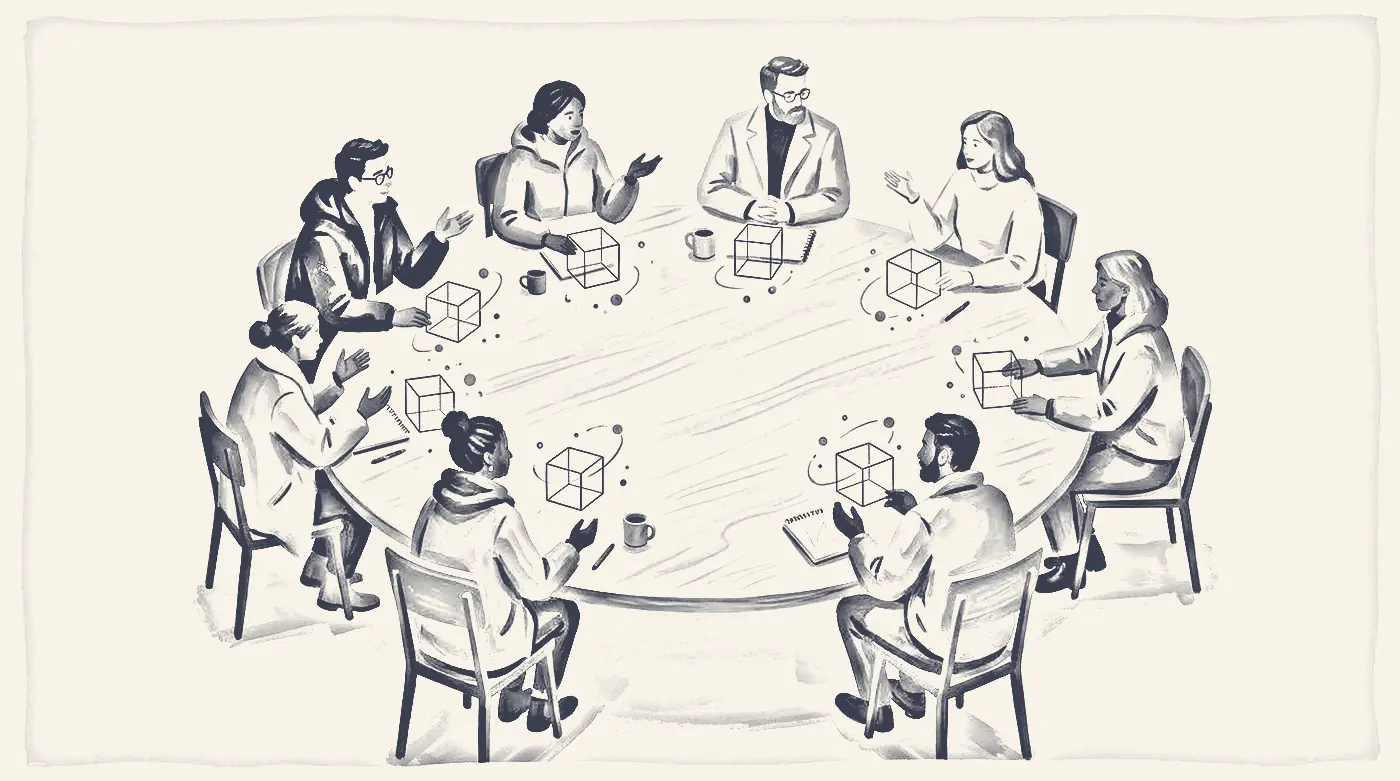
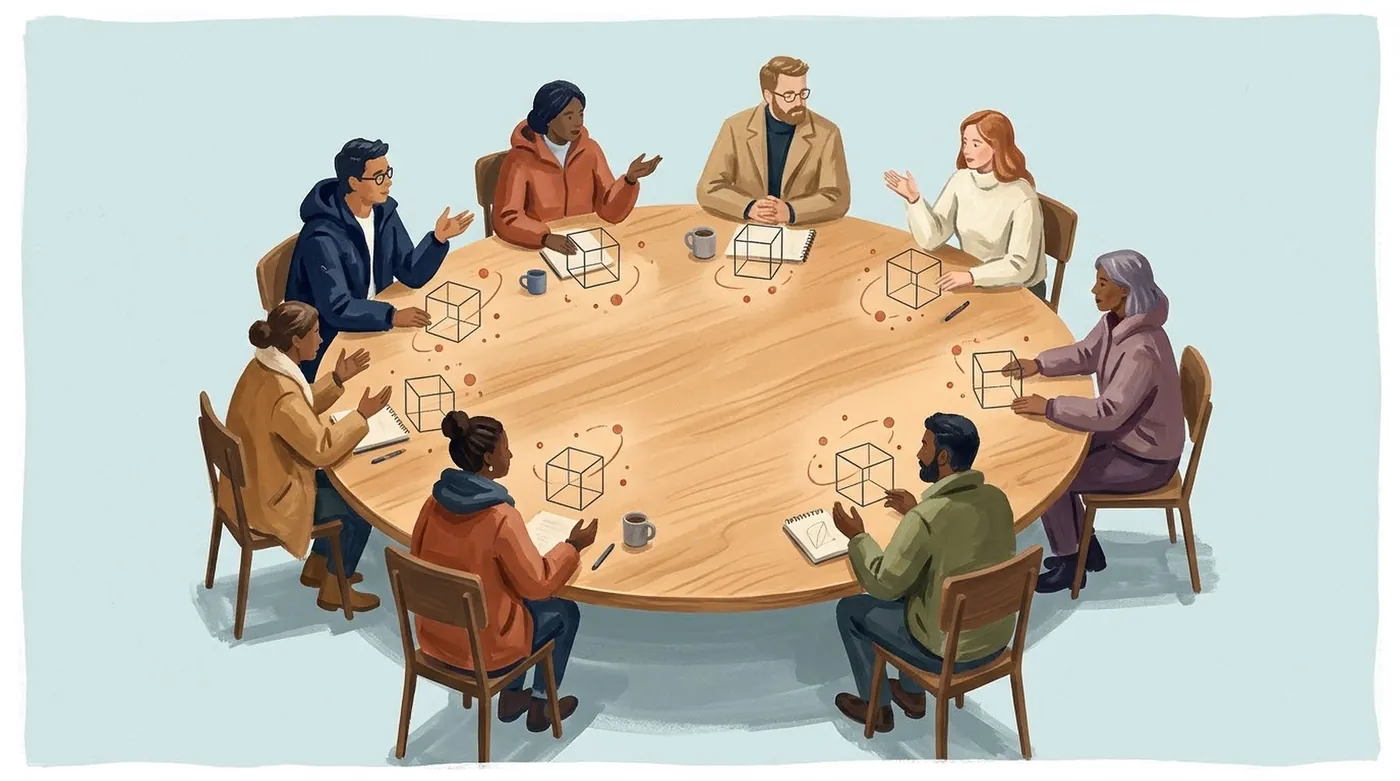
Ten people, ten agents,
one shared calendar
Chapter 01
The prompt
Everyone on a ten-person team now has their own AI agent, and all ten agents work in the same Slack channel, calendar and documents. Design the product.
Until now, an assistant worked for one person, on that person's own email, files and calendar
Now every person on the team has an agent, and every agent can change the things the team shares
Slack already lets a company add a whole roster of agents to its channels in a few clicks
Source: Slack, Add to Slack, Aug 2026
Chapter 02
What goes wrong
Each agent is built to get its owner what they want…
…so when two people want the same slot, both of their agents book it
A request posted in the channel slides out of view as the conversation moves on…
…and later in the week, an agent books a Friday meeting that includes Cara anyway
Agents also pass on things about colleagues that nobody actually said
Chapter 03
What the research found
In November 2026, a team of Anthropic Fellows tested this setup in four simulated workplaces
They compared one agent coordinating for everyone with a team of personal agents that message each other
The single coordinator reached better group outcomes in all four workplaces
Group outcome as a share of the best possible plan, Claude Opus 5
Requests reached the agent placing the order, but that agent often lost sight of them by checkout
Teams of Claude Opus 5 agents, group order
Teams of agents also made up claims about other people about three times as often as a single agent
Share of runs with a made-up claim about another person
Every one of these failures happens where agents share something, so the design starts with the shared things
Chapter 04
The design
The design has four parts, and each part answers one of these failures
First, find what the agents share
List everything that two or more agents can change, and leave everything else personal
Second, give each shared thing one steward
The steward is the only agent that can change the calendar, and personal agents send it requests
Databases avoid conflicting edits the same way, by sending every write for a piece of data through one place
With one steward deciding, the Tuesday double booking cannot happen
Third, keep requests in a ledger
Requests become records attached to the calendar, so they stay put while the channel moves on
Before every change, the steward checks the ledger, the way a pilot reads back an instruction
In the study, a simple version of this check rescued most of the runs that had failed
Failed group-order runs recovered when the final agent had to read its unread messages first
An agent can say what a colleague wants only by pointing to that colleague's entry
Fourth, act in public, with consent
Every change is posted to the team with who asked, who it affects and an undo button
A change that touches someone else's plans waits for that person's yes
Chapter 05
How I would measure it
Four numbers tell me whether the design is working
Four ways the design could fail, and what I would do about each
On a team of agents, each shared thing needs an agent of its own
Dive deeper
Reading
- Worse Together: How Performance Breaks Down in Multi-User Multi-Agent Teams (Anthropic Alignment Science, November 2026)
- Anyone can now build agents on Slack: introducing Add to Slack (Slack, August 2026)
Other cases
1 / 1↑ ↓